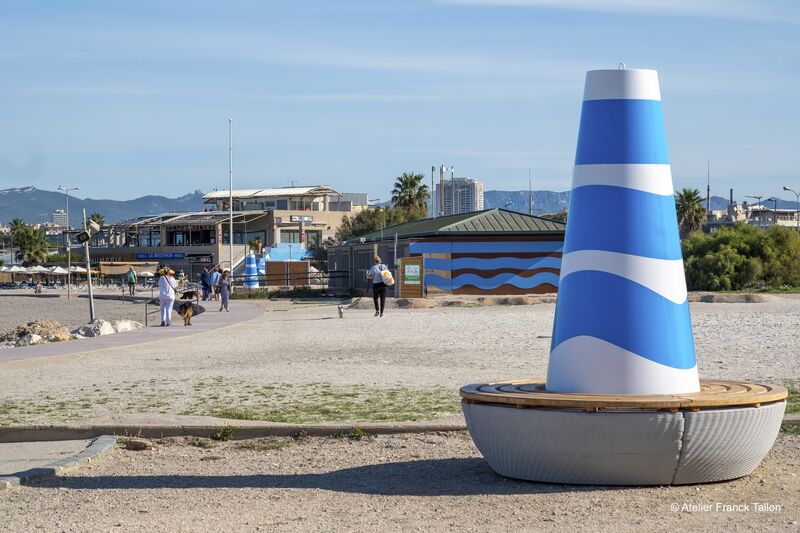
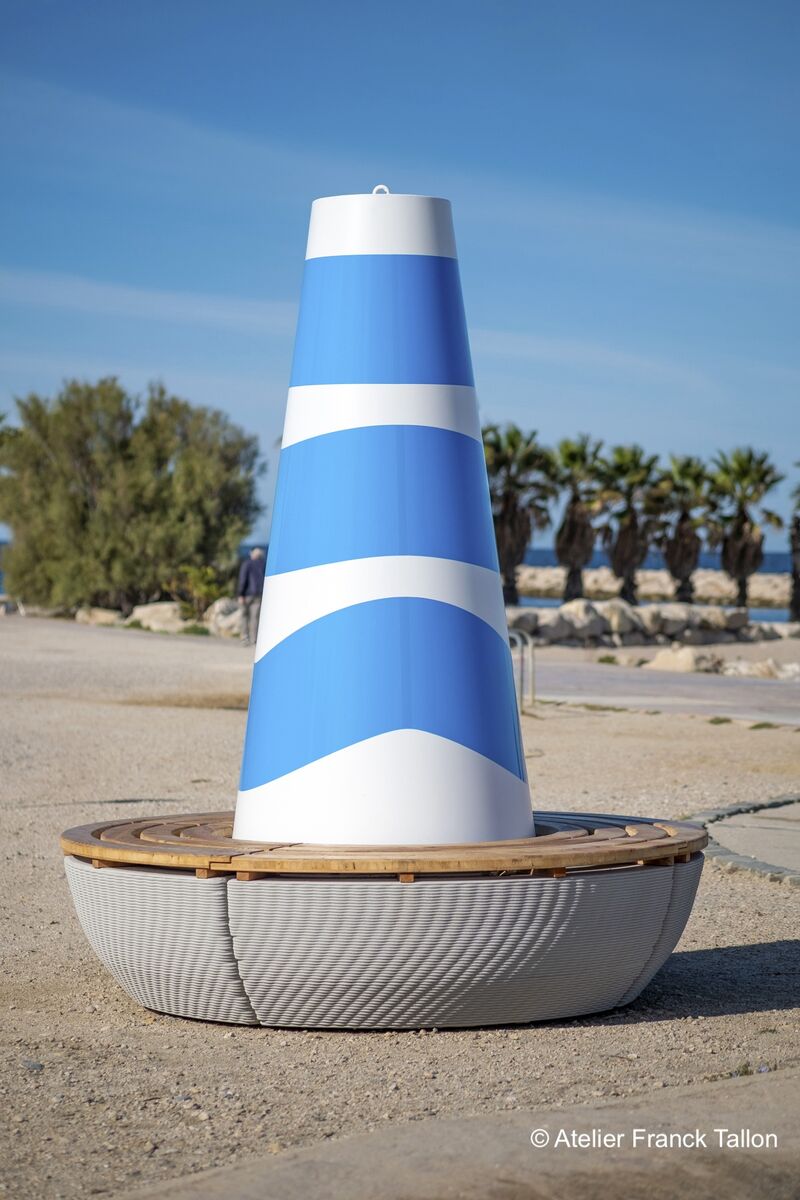
Lower part of marker buoys
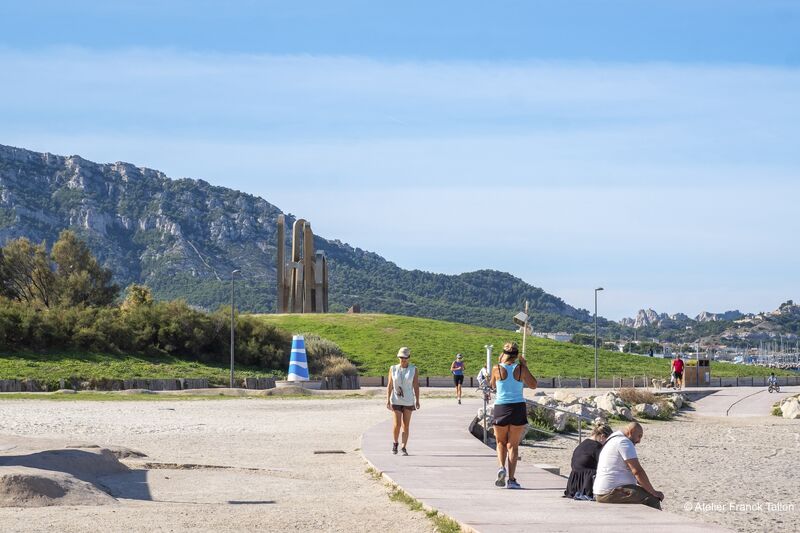
This unique project, developed for the City of Marseille in collaboration with Ateliers SudSide, reimagines the French coastline’s identity through the creative vision of designer and artistic director Franck Tallon. The initiative features a series of multifunctional maritime signaling buoys that pull double duty as both bold visual landmarks and functional public seating. The complex lower base of this custom urban furniture was specifically fabricated using 3D concrete printing.
The production of these bases relies directly on XtreeE’s advanced robotic additive manufacturing technology. By completely bypassing traditional wooden or metal formwork, the system translates the designer's digital models straight into precise robotic toolpaths. This allows for absolute geometric freedom, bringing organic, tailor-made shapes to life rapidly and without the constraints of conventional molds.
The true value of XtreeE's technology here lies in its precise material optimization. The robot deposits concrete layer-by-layer only where structural physics demand it, enabling the creation of lightweight, hollow structures. This hyper-targeted approach drastically slashes cement consumption, minimizes the installation's overall carbon footprint, and eliminates material waste entirely.
On a broader scale, this project perfectly illustrates how urban design is shifting toward agile, digital, and localized fabrication. It proves that 3D concrete printing now empowers municipalities to move away from mass-produced, standardized street furniture in favor of highly customized, eco-responsible infrastructures that are deeply connected to a city's unique DNA.
- Client
- City of Marseilles
- Architect / Designer
- Franck Tallon
- Production
- 3D Concrete