Intellectual Property
Built on deep R&D.
Protected worldwide.
From the very beginning, XtreeE has patented the core technologies of large-scale 3D concrete printing: from the extrusion head to the robotic architecture.
11
Patent families
9
Families with grants
9
Territories covered
Day 1
Innovation at the core
Technology clusters
Four domains of innovation
Every patent protects an operational technology, deployed on production systems worldwide.
Extrusion & Material
Printhead & Concrete Control
7 patent families
The intelligence of our print head: real-time flow control, in-line admixture injection, on-demand colorization, integrated surface smoothing and uninterrupted printing, even with full-size aggregates.
Reinforcement
Structural Enhancement
1 patent family
Continuous short-fiber reinforcement, steel, glass or polymer, oriented during extrusion for stronger printed parts.
Quality Control
In-Process Metrology
1 patent family
High-speed laser measurement of printed beads, for precise, real-time dimensional control during printing.
Robotics
Large-Scale Robotic Systems
2 patent families
Cable-driven parallel robots and dual-robot architectures that bring large-scale printing to any site, without rigid infrastructure.
Patent portfolio
Our patents
The core technologies we have protected worldwide.
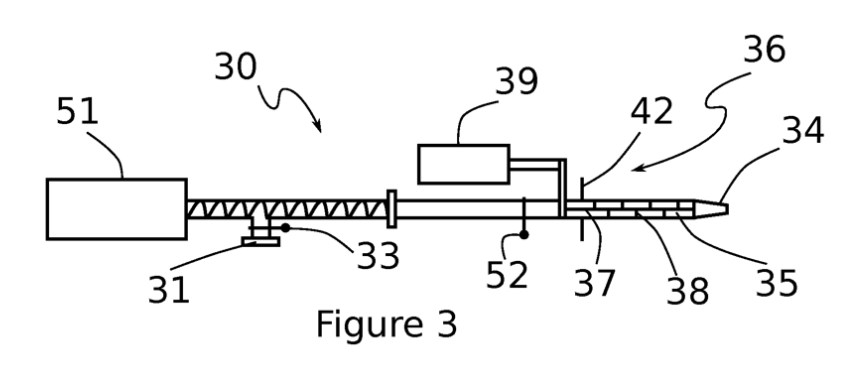
Intelligent Printhead Control
Concrete deposited at micron-level precision, adapting in real time to rheology changes.
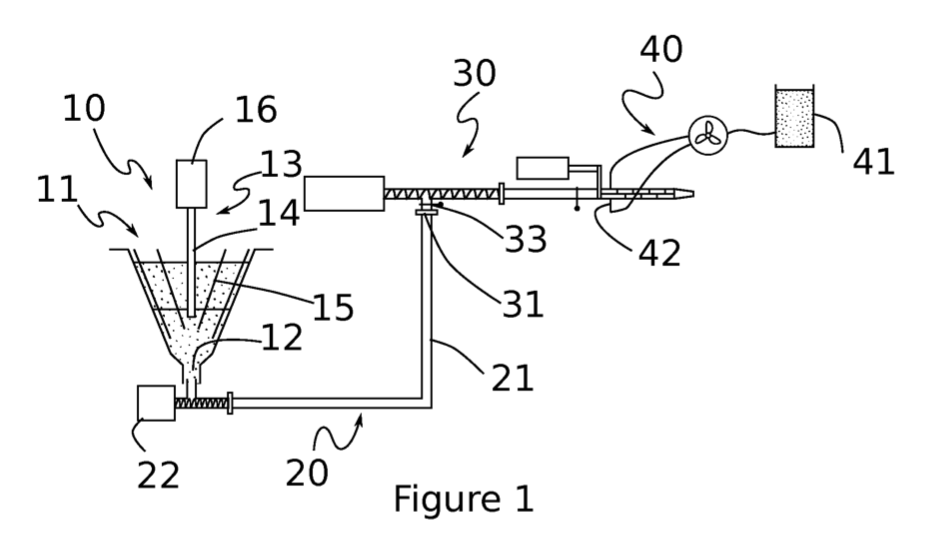
In-Line Admixture Injection
Adjust concrete chemistry on the fly, without interrupting the print.
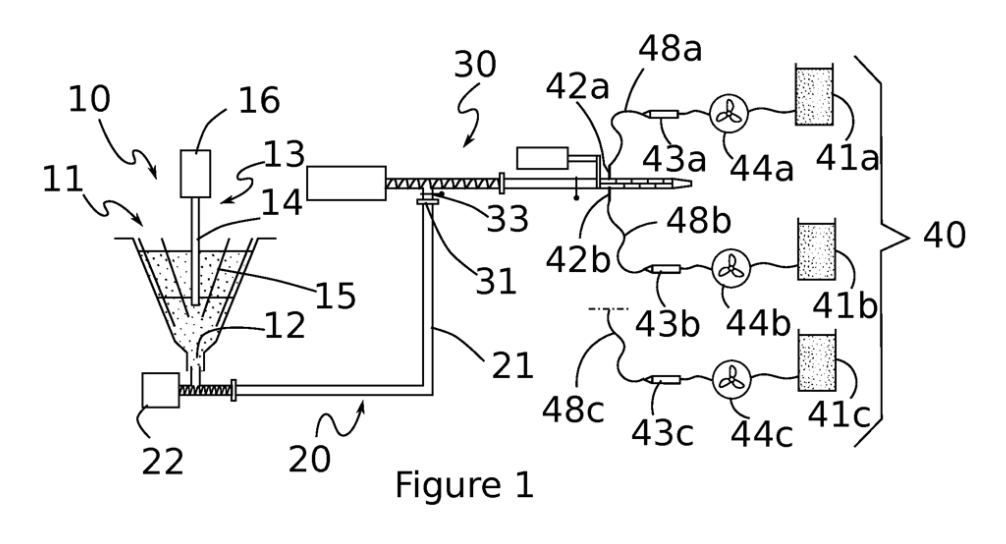
Concrete Colorization
Color throughout the wall, not just the surface. Full aesthetic freedom.
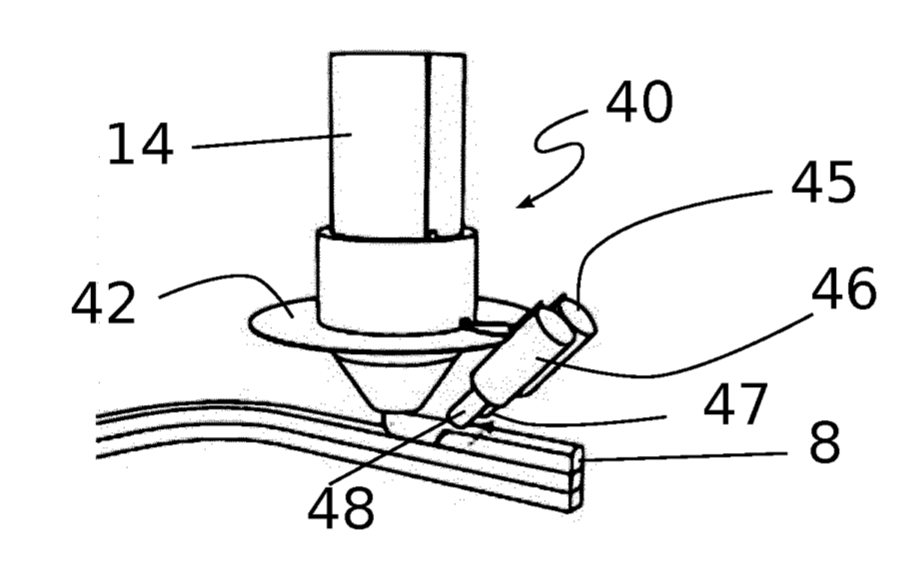
Active Surface Smoothing
Integrated troweling directly at the nozzle: zero post-processing.
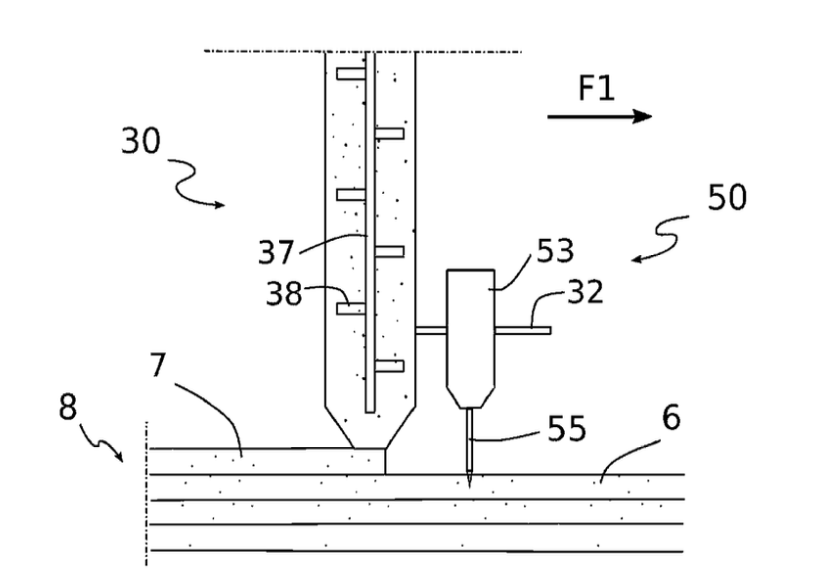
Concrete Re-fluidization
Resume after any pause with no visible defect on the structure.
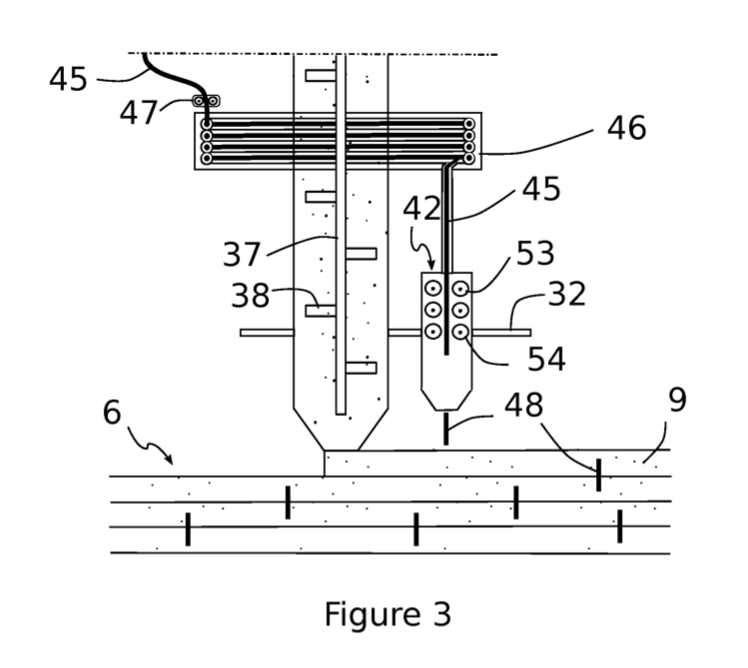
Short-Fiber Reinforcement
Steel, glass or polymer fibers oriented continuously during extrusion.
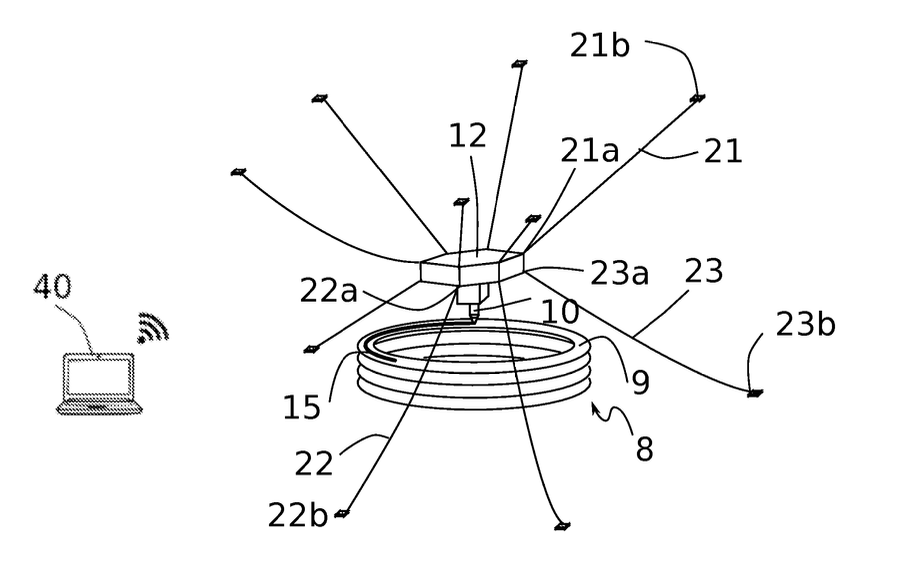
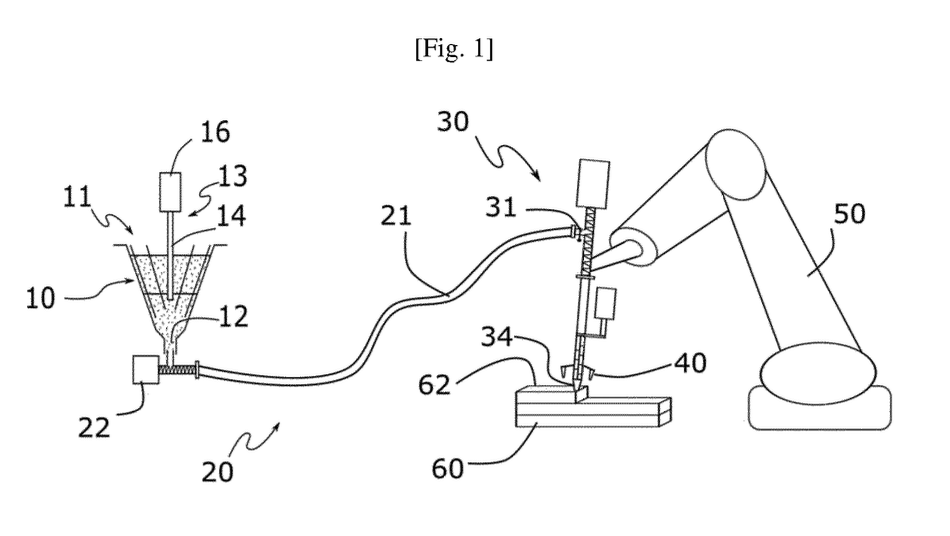
Cable-Driven Parallel Robot
Print at large scale without rigid infrastructure on site.
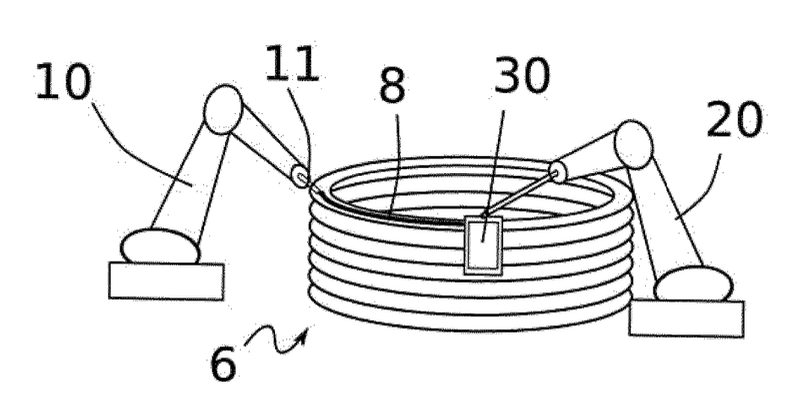
Additive Manufacturing with Embedded Part
Functional parts embedded directly within the printed structure.
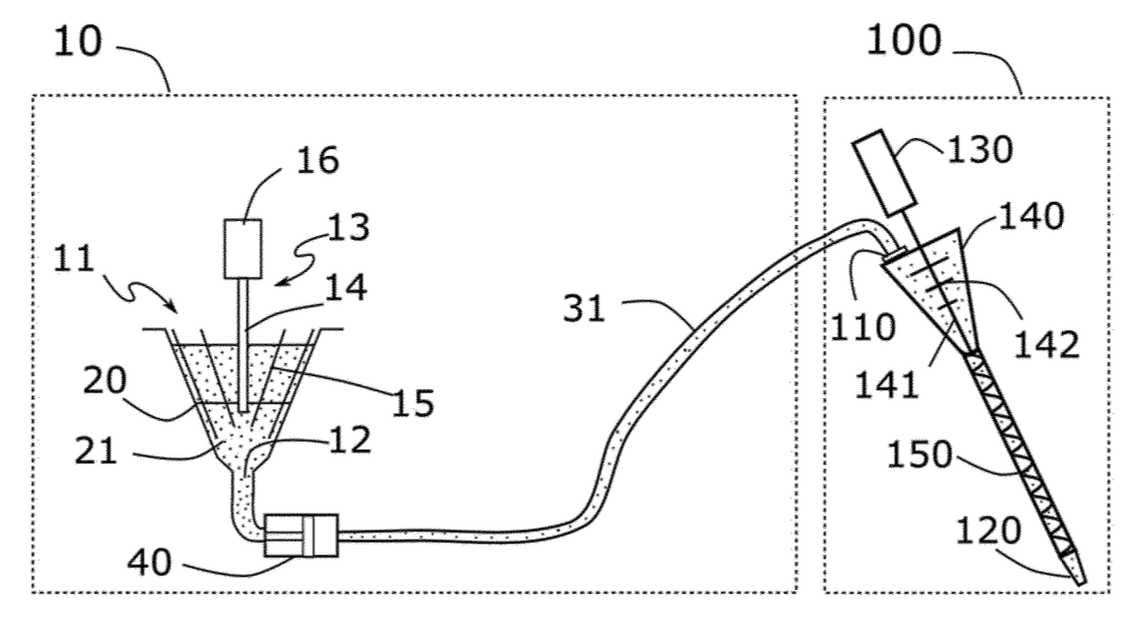
Printing with Aggregates & Steel Fibers
3D printing with full-size aggregates: structural-grade concrete, newly possible.
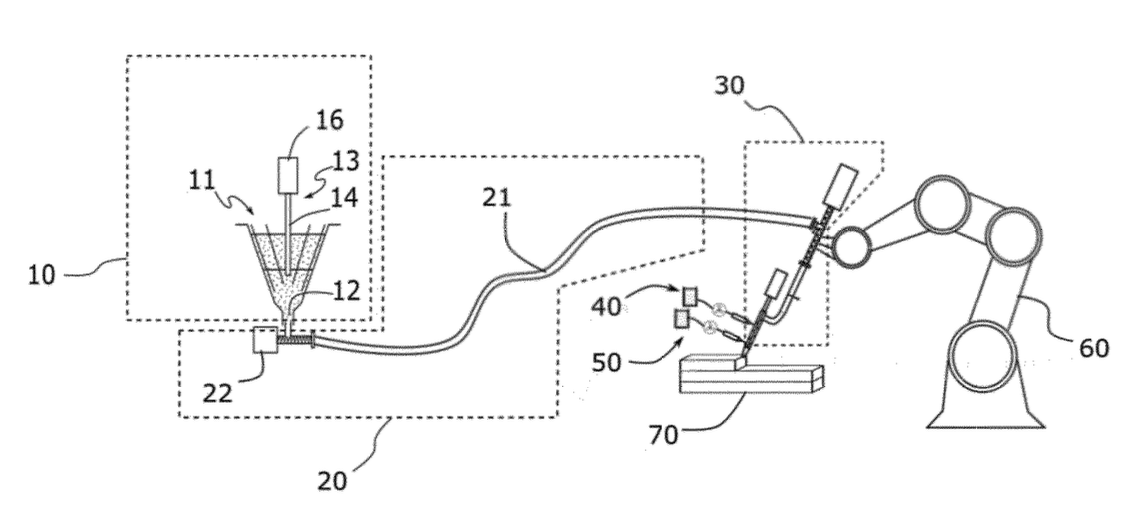
Extruded Bead Width Measurement
Real-time measurement of printed bead width for precise dimensional control.
Set Retardation Control
On-demand control of concrete set time for extended open time and reliable layer bonding.
Filing timeline
A continuous stream of invention
A new patent filed year after year, protecting every layer of the technology.
SmoothingColorizationFibersDual Robot
ControlAdmixturesCable Robot
Re-fluidization
Aggregates
Multi-laser
Retarder
Why it matters
Our IP is your
competitive edge.
When you deploy an XtreeE system, you operate on technology that competitors cannot legally replicate. That protection is built into every system we deliver.
Talk to our experts →︎Legal protection in 13+ territories
Europe, USA, China, Japan, South Korea, Canada and more.
Continuous, uninterrupted R&D
New patents filed year after year, since the very first day.
Full-stack coverage
From the nozzle to the robot arm: every critical layer is protected.
Scientific publications
Peer-reviewed research
A continuous body of published work by XtreeE and its affiliated researchers, in collaboration with leading universities and laboratories. Select a category to explore.
Journal articles · 17 peer-reviewed papers
Large-scale 3D printing of ultra-high performance concrete: a new processing route for architects and buildersDOI ↗︎
XtreeE's founding paper: introduces the robotic UHPC extrusion route at the core of the technology.
Classification of building systems for concrete 3D printingDOI ↗︎
A framework classifying concrete-printing construction systems by scale, support and assembly strategy.
3D printing using concrete extrusion: a roadmap for researchDOI ↗︎
A field-defining roadmap, co-signed with NIST, linking material state to extruded geometry.
Space truss masonry walls with robotic mortar extrusionDOI ↗︎
Robotic mortar extrusion producing walls that are both structural and insulating via space-truss geometry.
Concrete hybrid manufacturing: a machine architectureDOI ↗︎
Machine architecture combining additive and subtractive concrete processes around a cable-driven robot.
Flow-based pultrusion of continuous fibers for cement-based composite material and additive manufacturing: rheological and technological requirementsDOI ↗︎
Rheological and technological requirements for impregnating continuous fibers with cement paste during printing.
3D printing of mortar with continuous fibres: principle, properties and potential for applicationDOI ↗︎
Principle and mechanical properties of mortar printed with continuous fibres, and its potential for structural applications.
The “Slugs-test” for extrusion-based additive manufacturing: protocol, analysis and practical limitsDOI ↗︎
An in-line test estimating the yield stress of printable materials from the slugs falling at the nozzle.
Environmental impact of extrusion-based additive manufacturing: generic model, power measurements and influence of printing resolutionDOI ↗︎
A generic model backed by power measurements, quantifying the footprint of the printing process and the role of resolution.
Assessing the fresh properties of printable cement-based materials: high potential tests for quality controlDOI ↗︎
A review of the fresh-state tests with the highest potential for quality control of printable materials.
Affordable inline structuration measurements of printable mortar with a pocket shear vaneDOI ↗︎
A low-cost pocket shear-vane test for in-line structuration measurement of printable mortars.
Methodology for formulating low-carbon printable mortar through particles packing optimizationDOI ↗︎
Particle-packing optimization to formulate low-cement, printable mortars for bi-component systems.
Snapshot on 3D printing with alternative binders and materials: earth, geopolymers, gypsum and low carbon concreteDOI ↗︎
A review of the state of the art in 3D printing with earth, geopolymers, gypsum and low-carbon concrete.
Multi-physics modelling of 3D-printed concrete evolution in environmental conditionsDOI ↗︎
A multi-physics model of how printed concrete evolves under real environmental conditions.
A process-oriented perspective on multi-K 3D concrete printingDOI ↗︎
A review of multi-component concrete printing, approached from the process point of view.
Climate change contribution of 3D printing technologies: the trade-off between material and process impacts and its dependency on geometryDOI ↗︎
The trade-off between material savings and process impacts of printing, and how it depends on geometry.
From layer deposition to structural response: axial behavior of fiber-reinforced 3D-printed high-strength concrete columnsDOI ↗︎
Axial behavior of fiber-reinforced printed high-strength concrete columns, linking layer deposition to structural response.
Conference papers · 13 communications
Additive manufacturing and multi-objective optimization of graded polystyrene aggregate concrete structures
Additive manufacturing and multi-objective optimization of structures in graded polystyrene aggregate concrete.
Design of space truss based insulating walls for robotic fabrication in concreteDOI ↗︎
Design of insulating walls based on space-truss geometry for robotic fabrication in concrete.
Large-scale additive manufacturing of UHPC integrated formwork for truss-shaped pillarsDOI ↗︎
Additive manufacturing of complex UHPC elements through integrated formwork, applied to truss pillars.
Assessing the environmental viability of 3D concrete printing technologyDOI ↗︎
A life-cycle assessment showing the robotic cell can dominate the environmental footprint of printing.
Free deposition printing for space truss structuresDOI ↗︎
A free-deposition extrusion method forming regular beads over progressively assembled EPS supports.
Additive manufacturing of anisotropic concrete: a flow-based pultrusion of continuous fibers in a cementitious matrixDOI ↗︎
Flow-based pultrusion: continuous fibers impregnated and deposited within a cementitious matrix to produce anisotropic concrete.
Characterization of the layer-pressing strategy for 3D printing of concreteDOI ↗︎
Characterization of the layer-pressing strategy, where the nozzle shapes each layer as it is printed.
3D printing of continuous-fibers cementitious composites: anisotropic 3D mortarDOI ↗︎
Continuous-fiber cementitious composites printed as an anisotropic mortar.
Reinvent reinforced concrete with robotics and 3D printingDOI ↗︎
How robotics and printing with continuous fibers can reinvent reinforced concrete.
Design, structural optimization and fabrication of concrete shell through fiber-reinforced 3D printing
Design, structural optimization and fabrication of a concrete shell printed with fiber reinforcement.
Large-scale 3D printing of a shell structure reinforced by the flow-based pultrusion processDOI ↗︎
A large-scale shell structure printed and reinforced through the flow-based pultrusion process.
Toward the optimal use of local cementitious materials through novel admixture-technology and a dedicated 2K-printing-systemDOI ↗︎
Novel admixture technology combined with a dedicated bi-component printing system, to make the most of local cementitious materials.
An in-line method for estimation of early-age stiffness of 3D concrete printingDOI ↗︎
An in-line method estimating the early-age stiffness of printed concrete.
Book chapters · 5 contributions
Building applications using lost formworks obtained through large-scale additive manufacturing of UHPCDOI ↗︎
Lost-formwork construction by UHPC printing, illustrated through three real case studies.
Industrialising concrete 3D printingDOI ↗︎
Lessons from bringing concrete 3D printing to industrial production.
From laboratory to practice: characterizing fresh and cured printed materialsDOI ↗︎
Characterizing fresh and cured printed materials, from lab testing to industrial practice.
Structural applications of 3D printingDOI ↗︎
Structural design and modelling of printed concrete: masonry, prestressing and structural morphology.
Reinforcement of printed structuresDOI ↗︎
Reinforcement strategies for printed structures, with a focus on in-line reinforcement for Construction 4.0.
Doctoral theses · 3 dissertations
Systèmes constructifs en fabrication additive de matériaux cimentairesHAL ↗︎
Founding doctoral work on construction systems for robotic cementitious extrusion.
Bétons anisotropes: composites à matrices cimentaires renforcées par fibres continues pour la fabrication additive à grande échelleHAL ↗︎
Anisotropic concrete: continuous-fiber reinforced cementitious composites for large-scale printing.
Étude des procédés d'impression 3D de bétons fibrés pour la construction: formulation, renforcement et application
Formulation, reinforcement and application of 3D-printed fiber-reinforced concrete.
In collaboration with academic partners
Work led by our academic partners, where XtreeE contributed expertise, materials or industrial context without being the funding institution.
Mise au point d'un process échelle 1 d'impression 3D de béton avec fibres longuesHAL ↗︎
Development of a full-scale 3D concrete printing process integrating continuous long fibers.