The advantages
Design freedom
Because there is no formwork, complex and organic geometries cost no more to produce than simple ones. Curved walls, optimized structural shapes, ornamental elements and forms impossible to mould by hand all become feasible. This is why architects, designers and artists have adopted the technology, as our built projects show.
Material efficiency
Concrete is placed only where it is structurally needed. Combined with topology optimization, this can significantly reduce the volume of material used compared with conventional casting, cutting both cost and the carbon footprint associated with cement.
Speed and less formwork
Printing removes the time, cost and waste of building single-use formwork. Elements can be produced continuously, and prefabricated off-site under controlled conditions, then transported and assembled, shortening overall project timelines.
Automation and consistency
A robotic process follows a digital model precisely, reducing manual labour on repetitive tasks and improving the consistency of each printed element.
The challenges
An honest assessment also means naming the limits the industry is still working through.
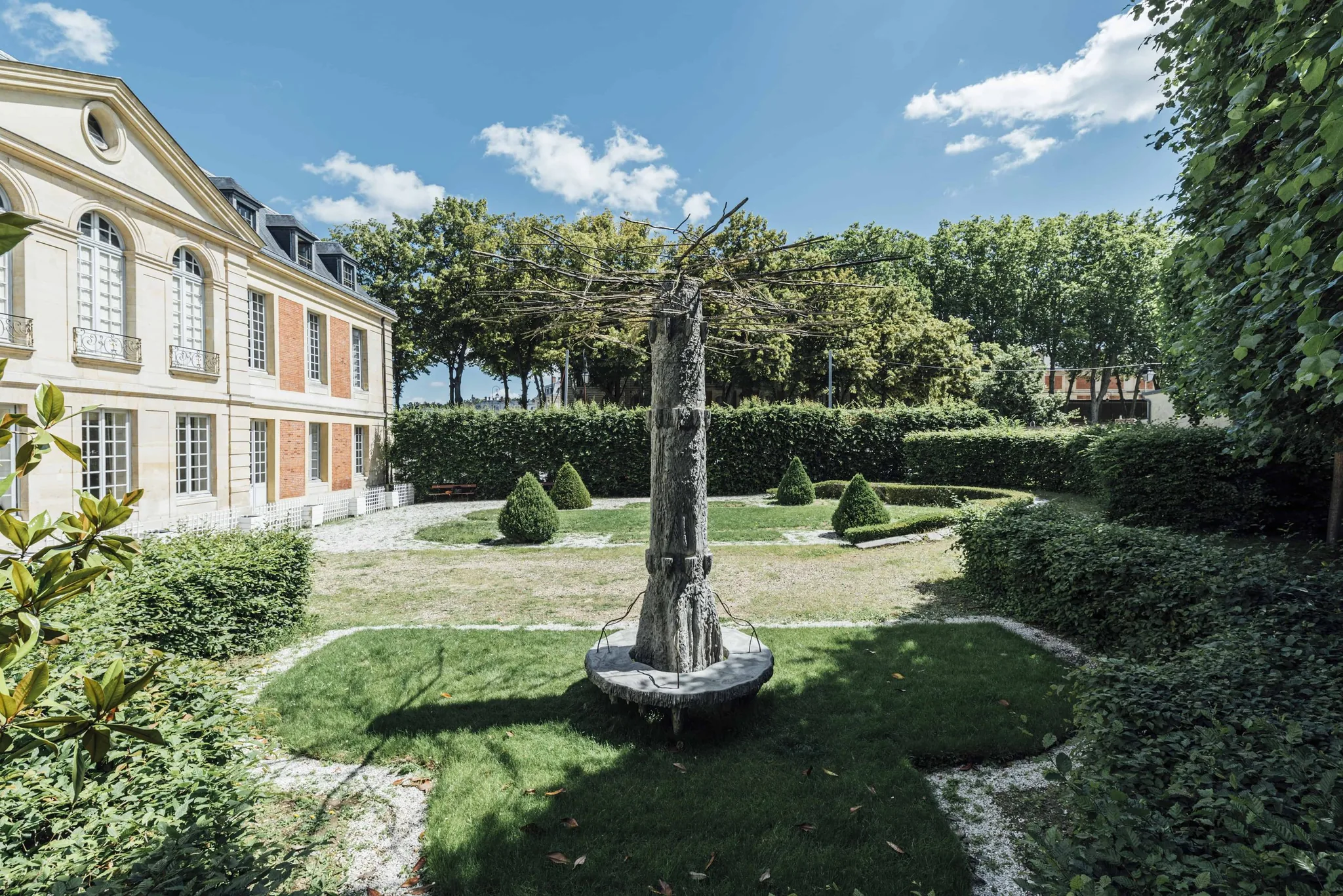
Design freedom: complex geometries at no extra cost, here for Eva Jospin.
Material formulation
Printable concrete must be fluid enough to pump and extrude, yet firm enough to hold its shape immediately. Getting this balance right is demanding, and it is precisely where the choice between 1K and 2K technology matters. Our 2K approach was developed to control this in real time during printing.
Reinforcement and standards
Integrating steel reinforcement into a printed structure is less straightforward than in traditional concrete, and building codes are still catching up with the technology. These are active areas of engineering and standardization work across the industry.
Scale and upfront cost
Print size is bounded by the reach of the robot or gantry, and the initial investment in a system is significant. This is why a modular approach matters: you can start with what you need and scale over time, rather than committing to an oversized system upfront. See our cost guide for how this works.
Is it right for your project?
3D concrete printing is no longer experimental: it has delivered certified housing, infrastructure, artificial reefs and public artworks. But it is a tool with a profile, strong where design complexity, material efficiency and prefabrication matter, and still maturing in areas like reinforcement and codification. The right question is not whether the technology is perfect, but whether its strengths match what you are trying to build.
Explore our technology →︎
See what we have built →︎
Discuss your project →︎