AI-Generated Printable Porosity
“An AI-assisted workflow converts porous image patterns into variable-height cellular structures optimized for continuous robotic concrete 3D printing.”
About the project
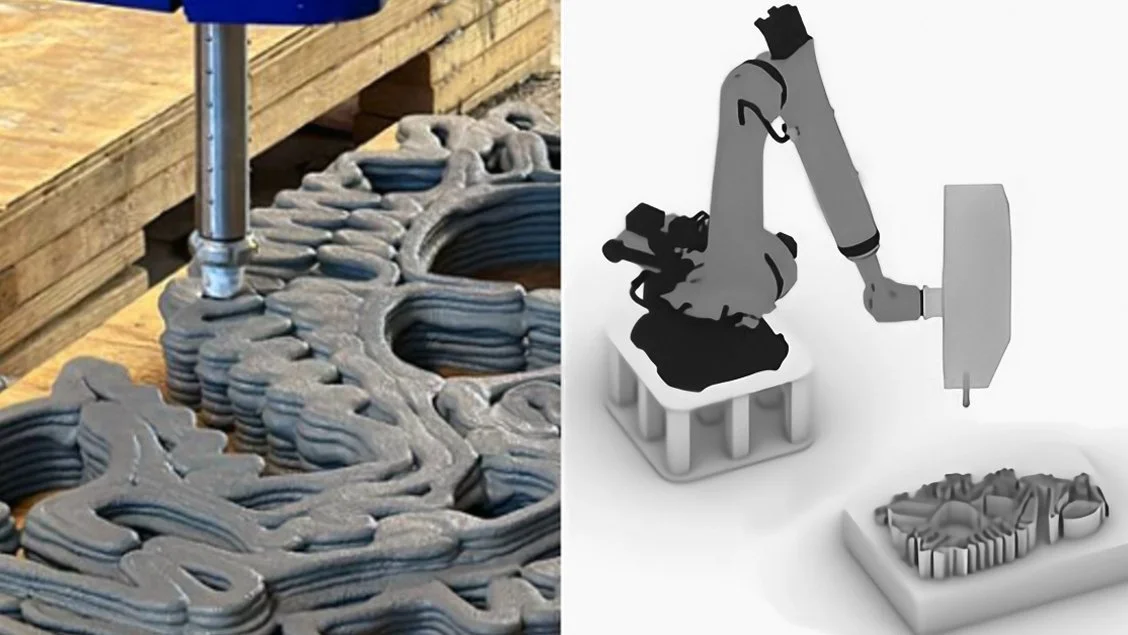
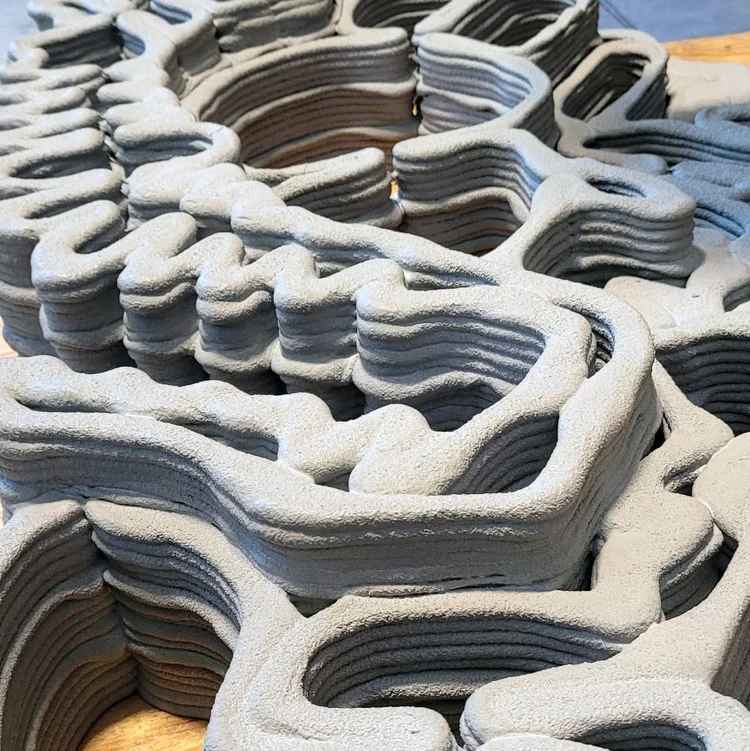
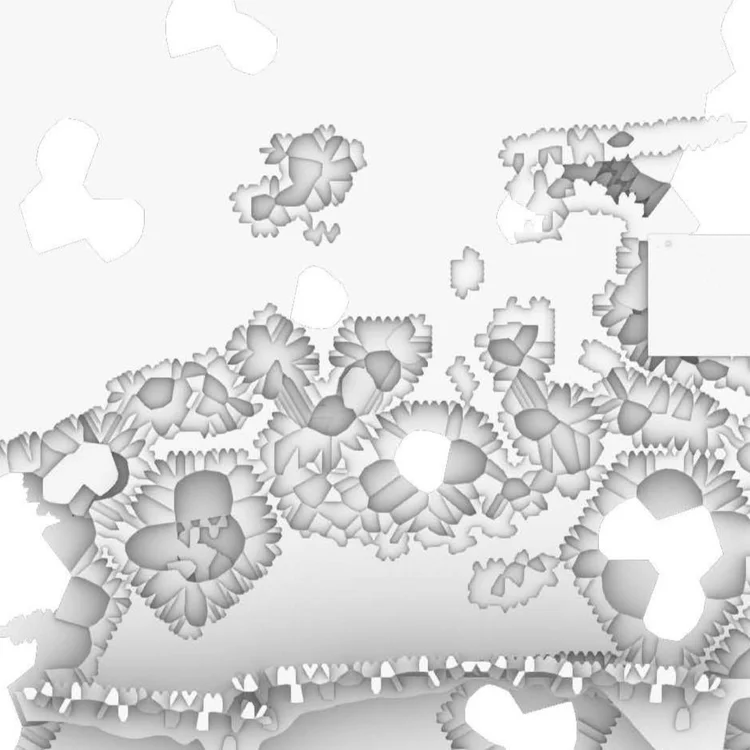
The Variable Heights Cellular Structure project investigates the translation of AI-generated porous images into printable concrete geometries. Using generative image systems and custom computational workflows, two-dimensional patterns are transformed into three-dimensional cellular networks with varying densities and heights.
The resulting wall-and-bench structure creates gradients of light, shadow, ventilation, and enclosure while maintaining a continuous printing path required for robotic concrete fabrication. Through algorithmic control of porosity and material distribution, the project demonstrates how artificial intelligence can contribute to environmentally responsive architectural design and fabrication.
Technical details
Material
Printed concrete
Dimensions printed
1m x 0,8 m x 30cm
Process
2K Printing
Photo gallery
Credits
- Architect / Designer
- Hi-DARS Lab
- Engineering
- Associate Prof. Dr. Sina Mostafavi
- Production
- Hi-DARS Research Team
Links